
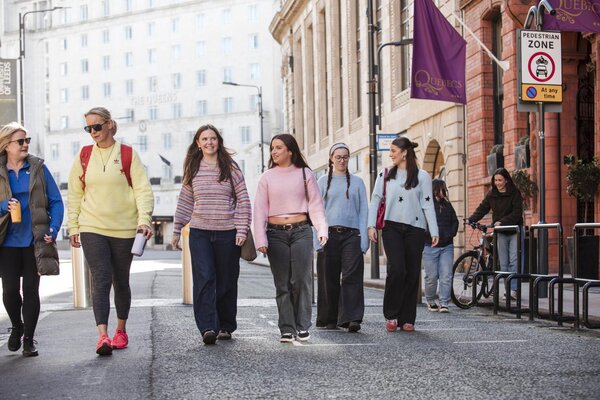
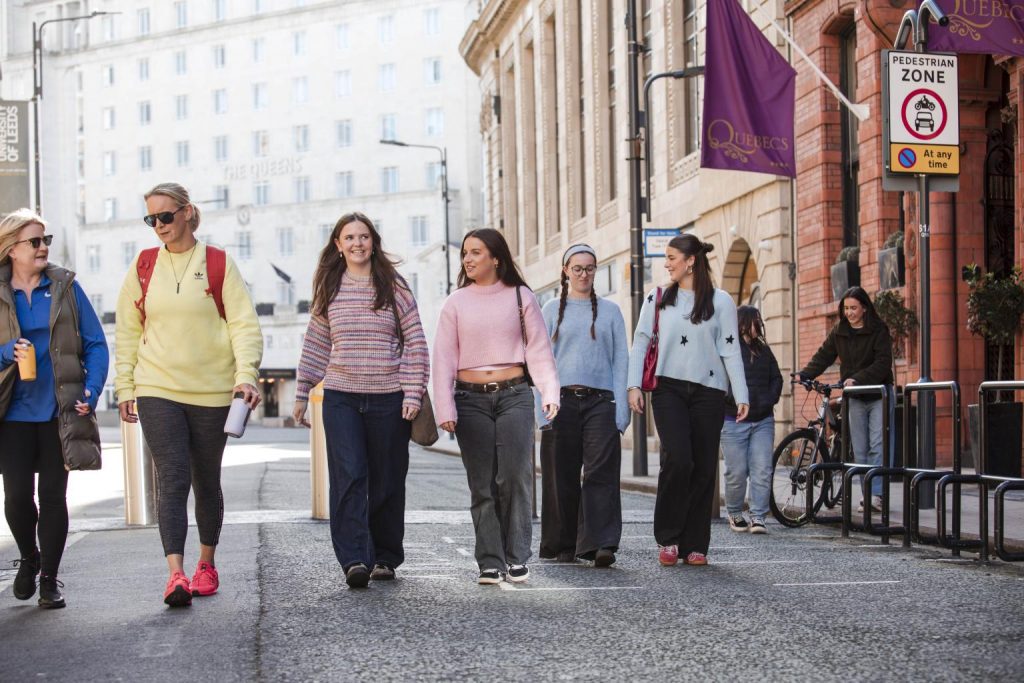
English councils will, for the first time, receive national guidance on how to design streets that are safer and more welcoming for women and girls. The new framework, being developed by Active Travel England (ATE), aims to tackle what ministers describe as a “systemic unfairness” in people’s ability to move freely around their own neighbourhoods.
The guidance, due to be published later in 2026, will outline practical measures such as improved street lighting, better visibility, upgraded CCTV, and replacing dark underpasses with safer, street‑level crossings. It will also draw on international examples, including night‑time “request stops” used in Spain and Sweden that allow women to get off buses closer to home, reducing the distance walked in the dark.
The initiative is underpinned by new polling commissioned by ATE, which highlights the scale of the challenge. Nearly three‑quarters of women report changing their routes in winter to avoid unlit areas, and 88% say they feel unsafe walking alone after dark. More than half have opted for taxis or lifts instead of walking due to safety concerns.
Local Transport Minister Lilian Greenwood describes the work as a fundamental issue of fairness, noting that many women and girls make a “constant, exhausting mental calculation” about lighting, routes and risk when simply trying to get from A to B. The guidance will be accompanied by training for councils, and (mirroring ATE’s approach to cycling infrastructure) funding bids will only be approved for schemes that meet new quality standards.
Home Office minister Jess Phillips emphasises that the aim is to shift responsibility away from women modifying their behaviour, and towards designing public spaces and systems that reduce risk. ATE Commissioner Chris Boardman adds that the guidance will be shaped not only by technical evidence but by listening to lived experience.
The move follows criticism earlier this year when national planning guidelines failed to mention women’s safety. The forthcoming ATE guidance is intended to close that gap, embedding gender‑aware design into local decision‑making and helping create streets where everyone feels safe to walk.