
18 December 2025 (1pm GMT)

This content is limited for members only
Within our member-only pages we provide a wide range of useful information resources including:- Recordings of our talks
- Presentations
- Academic research papers
- Case studies
- Guidance on standards and good practice
- Project opportunities
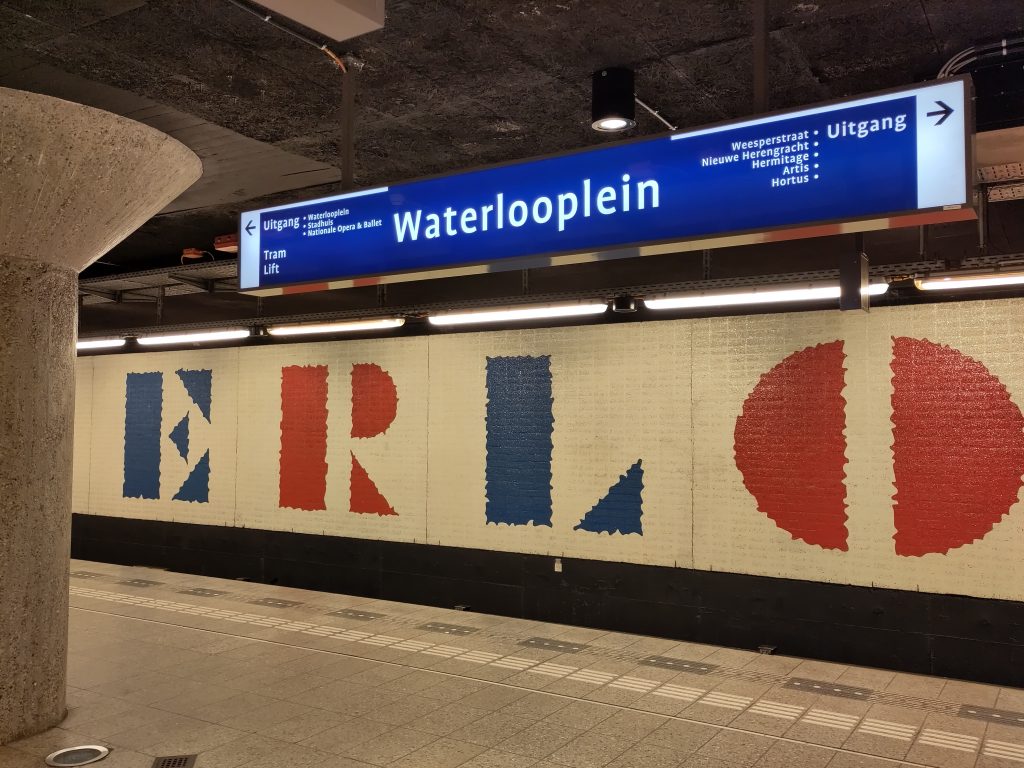
Fenne Roefs’ (Mijksenaar) talk explored how the Amsterdam Metro is rethinking its wayfinding system to make it more inclusive. It’s a story of design as inclusion: how small changes in signage can transform the experience of hundreds of thousands of daily passengers, bridging languages, cultures, and abilities.
Every day, around 275,000 people navigate the Metro’s 39 stations. Some know the system well; others are tourists, newcomers, or occasional users. Current signs rely on Dutch words and arrows, but are these comprehensible for all travellers: non-Dutch speakers; people with low literacy; or those with cognitive impairments? The challenge posed to wayfinding experts Mijksenaar by Vervoerregio Amsterdam (VRA) was simple yet key to the strategy’s success: how can signage be clear for everyone?
This talk shared the journey from challenge to implementation, showing how thoughtful design can make public transport more equitable and welcoming.
About the speaker
Fenne Roefs leads the Lab at Mijksenaar BV, the company’s in-house research and innovation institute. She holds an MSc in Cognitive Psychology and a BA in Graphic Design, a combination born from her fascination with how people perceive, interpret, and move through the world. To keep up-to-date with the latest scientific insights, Fenne is currently undertaking a PhD at VU Amsterdam. Her research focus is on visual information design, with a particular interest in the visual language of warning flags used at open-water locations. Using traditional research, citizen science, and research-through-design methods, Fenne is investigating how these flags can communicate their messages clearly, and motivate safe behaviour.