
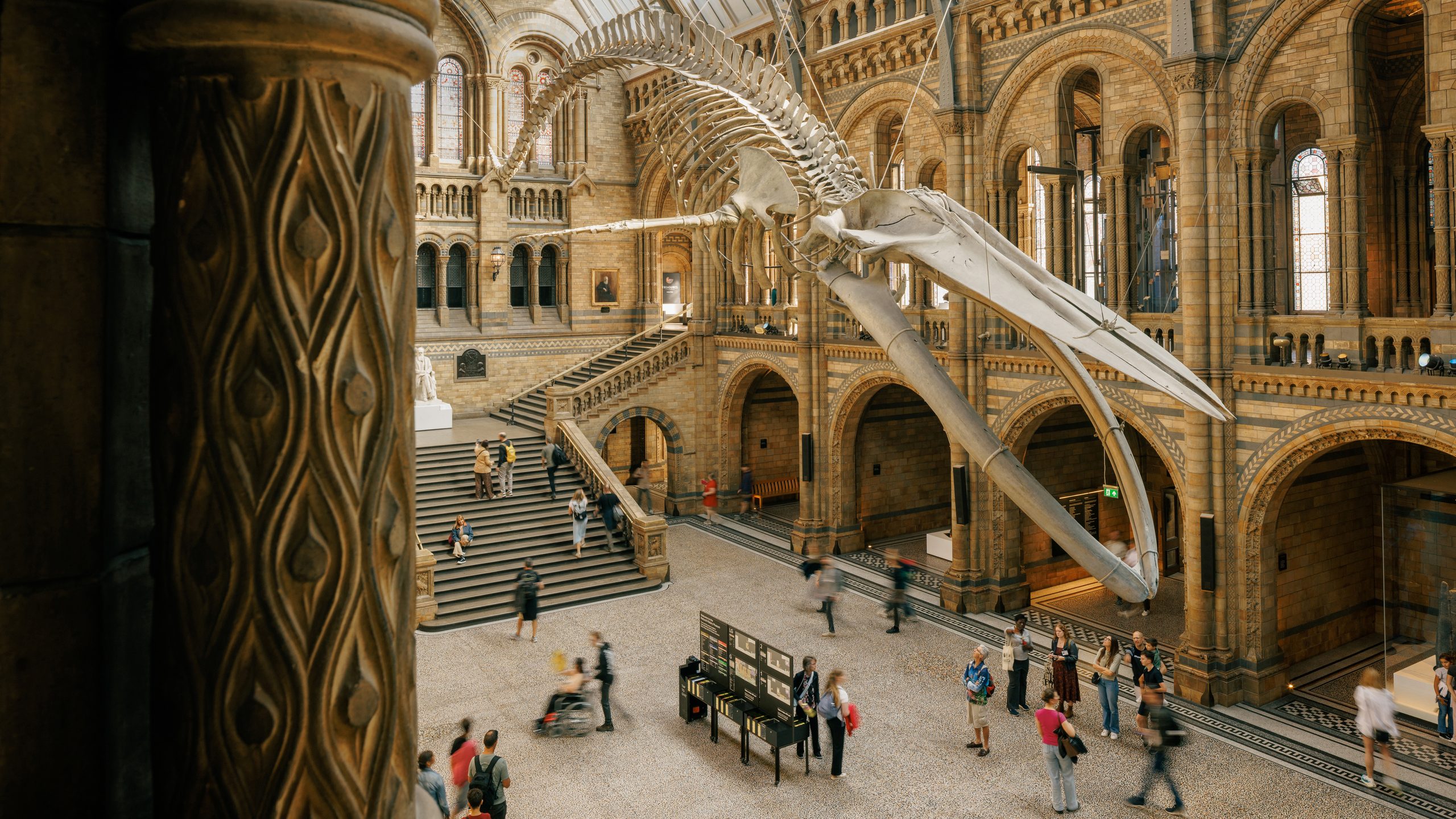
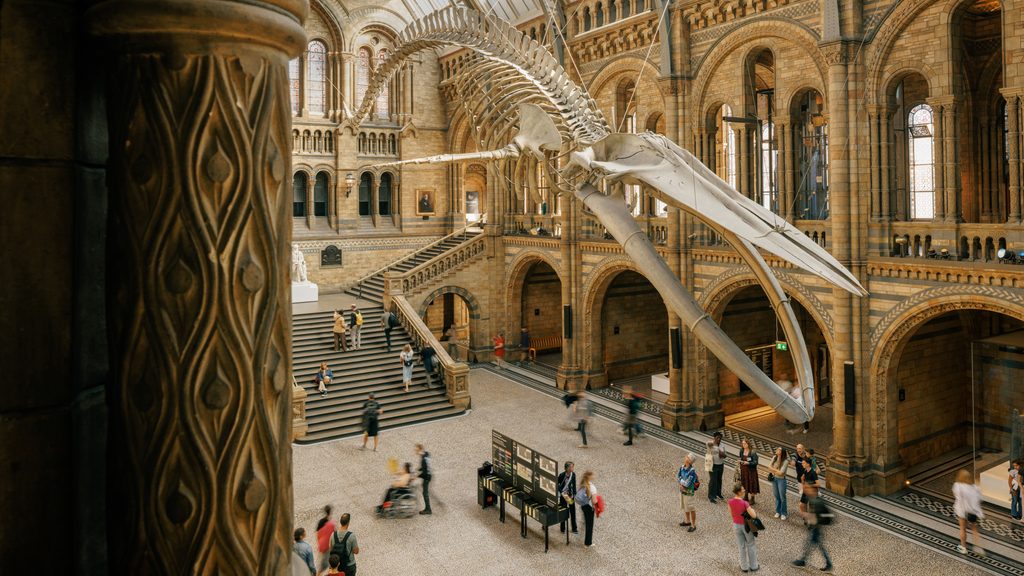
A new wayfinding system and redesigned visitor map are helping visitors navigate the Natural History Museum’s South Kensington and Tring sites more easily.
Developed by design consultancy DNCO, the project introduces more than 400 permanent and portable signs across the Museum’s estate. It represents the first major overhaul of the Museum’s wayfinding system since 2007.
With a record 7.1 million visitors last year, the Natural History Museum remains the UK’s most-visited attraction. Many arrive with a particular destination in mind, but the Museum’s extensive network of galleries, corridors, staircases and entrances can be challenging to navigate.
Rather than simply replacing signs, DNCO developed a comprehensive wayfinding strategy centred on visitor needs. Building on a five-zone framework developed by Endpoint, each zone has been assigned a distinct colour that is applied consistently across maps, directional signs and gallery identifiers.
A key component of the project is a redesigned Museum map. Research found that previous mapping approaches made it difficult for visitors to understand the relationship between spaces and levels. DNCO responded with a simplified plan that prioritises orientation and legibility, helping visitors find their way more easily.
The new system was extensively tested with members of the public, including accessibility testing, before being rolled out across the Museum’s sites.
Working within the constraints of a Grade I-listed building, the design takes inspiration from the Museum’s historic display cases, using patinated brass frames and dark metal finishes that complement both Alfred Waterhouse’s original architecture and more contemporary spaces.
The project was delivered with fabrication partner Standard 8 and installed in phases to allow the Museum to remain open throughout the process.
Patrick Eley, Executive Creative Director at DNCO, said: “Designing signage for the Natural History Museum is a bit like trying to organise an ant colony. Only the ants are seven years old, wearing hi-vis jackets and all looking for the dinosaurs.”
The new wayfinding system is now fully installed across both the Museum’s South Kensington and Tring sites.